
Last updated October 30, 2026
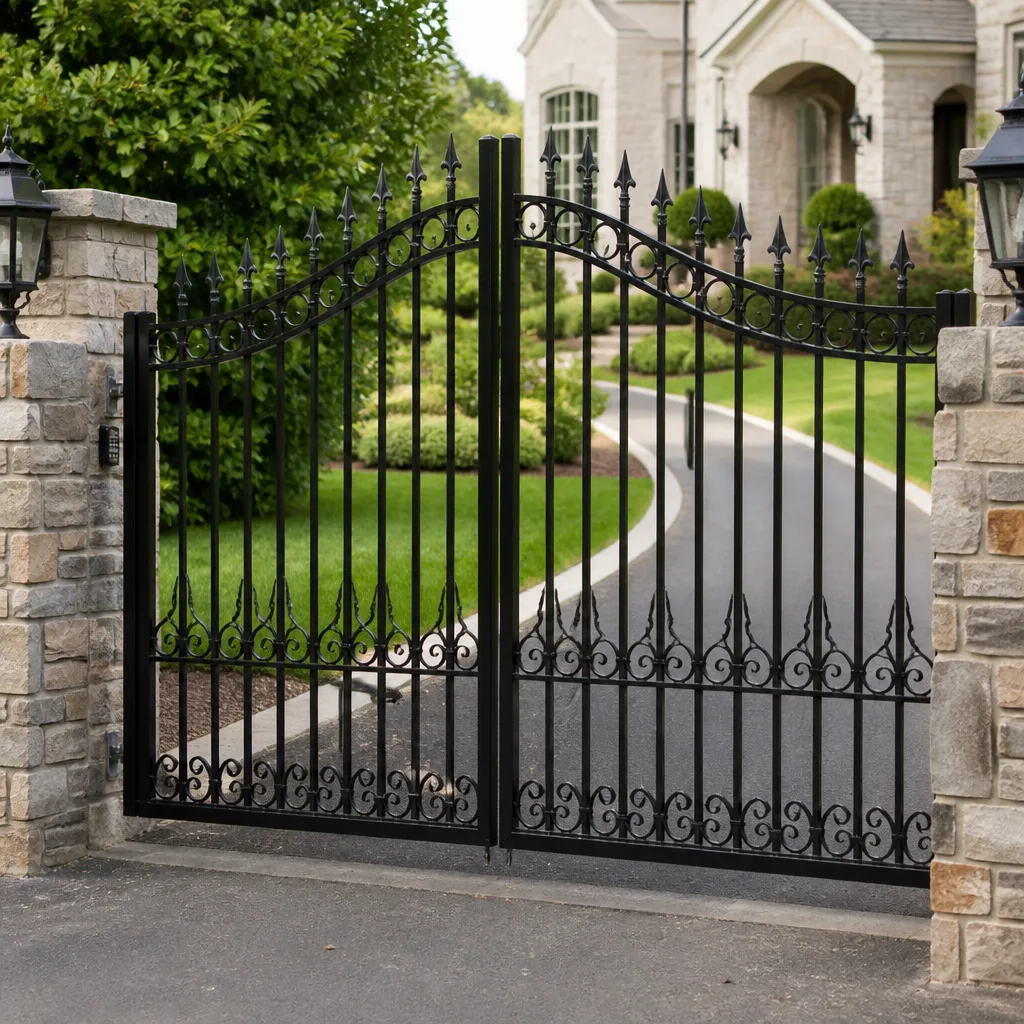 Wrought iron
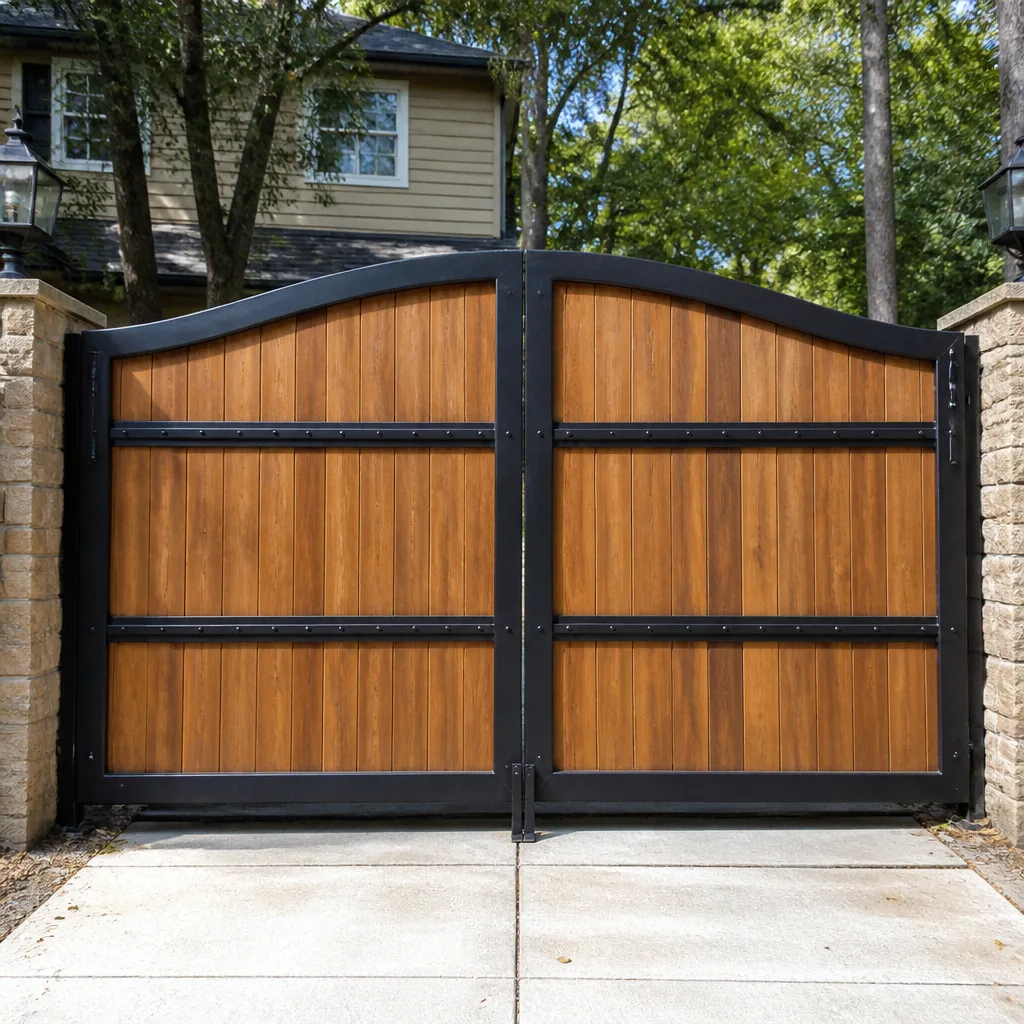 Wood & steel frame
 Farm & ranch
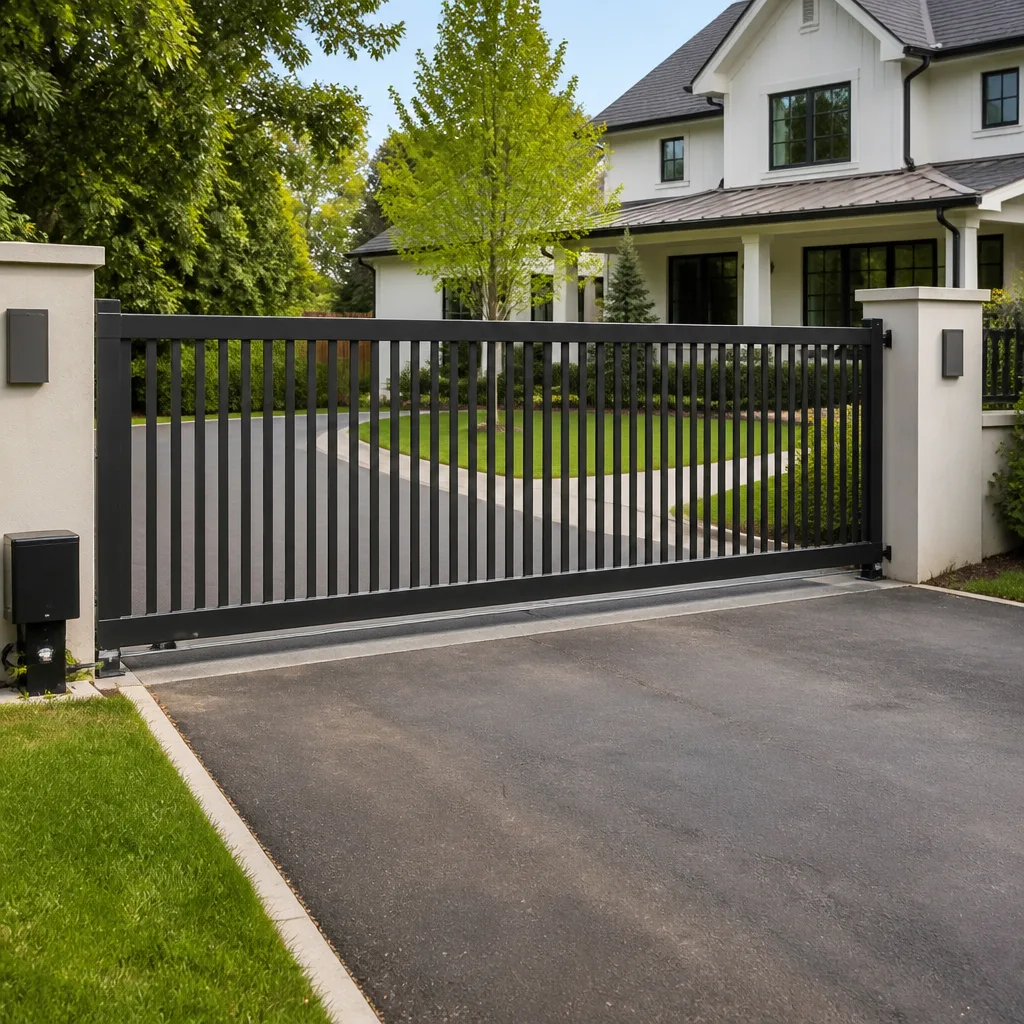 Sliding driveway gates
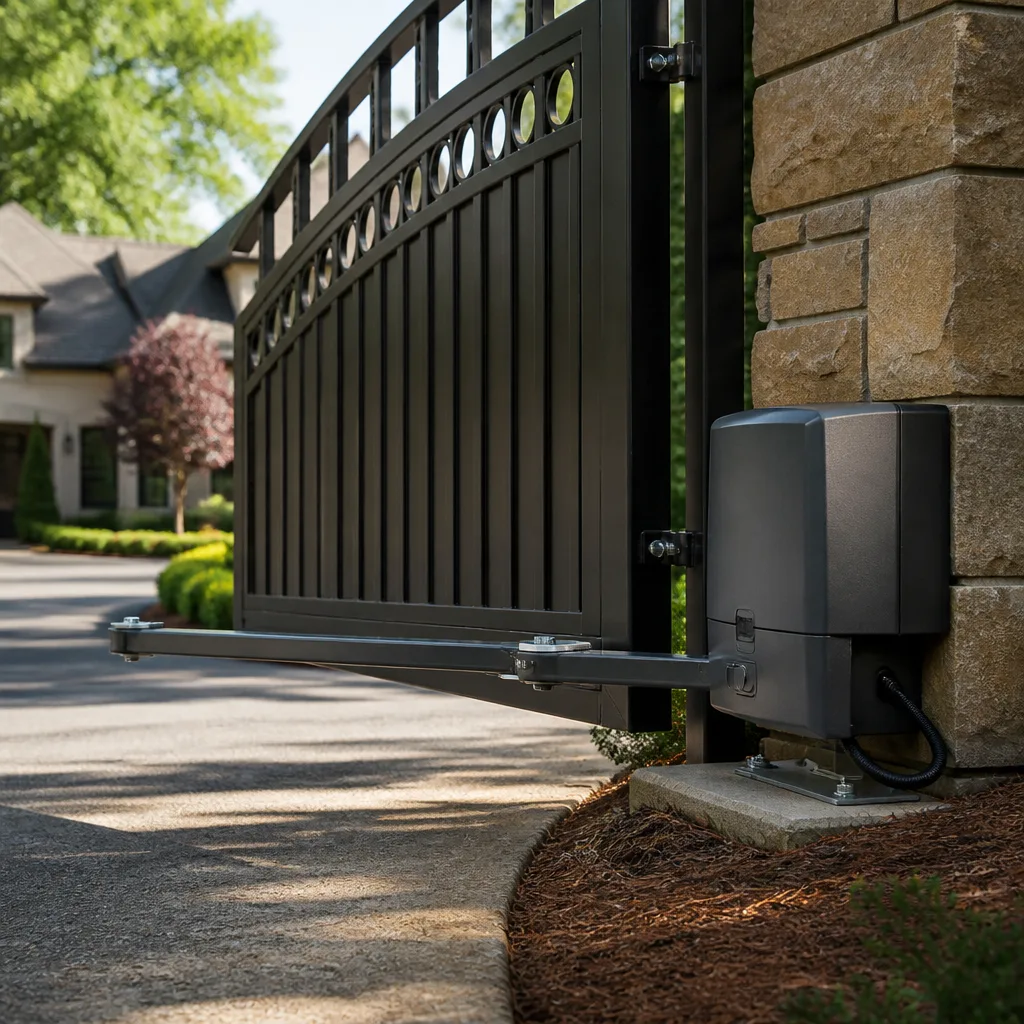 LiftMaster operators
Free on-site gate assessment - hinges, posts, and your LiftMaster or Nice gate operator checked before anything is quoted
The assessment is free and the quote is the invoice.
Get your free estimateGate Repair Emergency Preparedness Guide for Miami Gardens Homes
Here’s a number that surprises most Miami Gardens homeowners: the single most common emergency gate call in South Florida isn’t a crashed vehicle or a snapped hinge. It’s a gate stuck closed after a power outage, and in our experience, roughly eight out of ten of those calls could be avoided entirely if the homeowner knew where their manual release was and had tested it once before the emergency happened. This guide walks you through the two fundamentally different gate emergencies, how to respond to each without making things worse, and what to prepare now so you’re not fumbling with a flashlight at 11pm.
Styles & brands we work with
Quick Answer
Every gate emergency in Miami Gardens is either a security emergency (gate stuck open, property exposed) or an access emergency (gate stuck closed, people or vehicles trapped), and each one demands a different first response. Before any emergency happens, locate and test your manual release, write down your gate brand and model number, and save a Gate Repair services specialist’s number in your phone. For stuck-open gates, secure the property first. For stuck-closed gates, use the manual release, not force, to regain access.
Table of Contents
- The Two Types of Gate Emergencies (And Why They Need Different Responses)
- Your Pre-Emergency Setup Checklist: What to Do Before Anything Breaks
- Response Protocol: Gate Stuck Open (Security Emergency)
- Response Protocol: Gate Stuck Closed (Access Emergency)
- How to Manually Operate a Swing Gate vs. a Slide Gate Without Damaging It
- What to Tell a Gate Repair Company When You Call: The Three Pieces of Information That Get the Right Technician Faster
- Post-Hurricane Gate Assessment for Miami Gardens: What to Check Before Restoring Power
- Common Mistakes to Avoid
- When to Call a Professional
- Frequently Asked Questions
- The Bottom Line
The Two Types of Gate Emergencies (And Why They Need Different Responses)
Most homeowners think of a “gate emergency” as one big category, but that thinking leads to bad decisions in the moment. There are actually two distinct situations, and the right response to one is the wrong response to the other.
A security emergency is a gate stuck open. Your property line is now unsecured. Anyone can walk or drive in. This is the scenario that matters most at night, when a gate that was supposed to close at 9pm is still standing wide open at 2am. The immediate goal is not to fix the gate. It’s to secure the opening.
An access emergency is a gate stuck closed. Someone inside can’t get out, or someone outside can’t get in. This is the scenario that matters most in the morning, when you need to leave for work and the gate won’t budge. The immediate goal is to regain passage without damaging the operator, the motor, or the gate itself.
Miami Gardens weather makes both scenarios more common than they’d be elsewhere. Humidity shortens control board lifespans. Afternoon thunderstorms knock out power regularly. Salt air from the coast, even eight miles inland, accelerates corrosion on hinges and motors. And hurricane season, from June through November, delivers the kind of sustained wind and rain that stresses every moving component on an automatic gate system.
If you only remember one thing from this guide, remember this: a stuck-open gate is a property problem. A stuck-closed gate is a mechanical problem. Property problems get secured first, then diagnosed. Mechanical problems get diagnosed before force is applied.
We see both scenarios every week across Miami Gardens, from the residential streets of Bunche Park to the commercial lots along NW 27th Avenue. The homeowners who handle these situations well all have one thing in common: they prepared before the gate failed. The ones who don’t prepare end up either leaving their property exposed overnight or damaging a perfectly repairable gate by forcing it open.
Your Pre-Emergency Setup Checklist: What to Do Before Anything Breaks
The single best emergency plan is the one you never have to execute under pressure. Here’s the setup checklist we recommend to every homeowner in Miami Gardens. It takes about twenty minutes, and it will save you hours of stress later.
- Locate your manual release. Every automatic gate has one. On swing gates, it’s typically a lever or knob on the operator arm near the gate itself. On slide gates, it’s usually a handle on the operator that disengages the drive gear. If you don’t know where yours is, look at the operator box and trace any visible handles, levers, or keyed cylinders. This is the number one piece of information that turns a 2am emergency into a two-minute fix.
- Test the manual release once. Disengage it, push the gate open and closed by hand, then re-engage it. This confirms two things: the release mechanism works, and the gate moves freely without power. If the gate feels heavy, scrapes, or binds, note that and mention it when you call for service. A gate that’s hard to move manually is a gate that’s already straining its motor.
- Identify your control panel. This is the box that houses the control board, usually mounted near the gate or on a nearby wall. Open it so you know what’s inside before an emergency. You’re looking for clearly labeled power switches, the main circuit breaker, and any LED indicator lights.
- Write down your gate brand and model number. The brand is usually printed on the operator itself. Common brands in Miami Gardens include FAAC, BFT, Linear, and Viking, among others. The model number is often on a sticker on the side or inside the control panel. Write both down and take a photo with your phone. This single step cuts diagnostic time dramatically when you call for service.
- Find the gate’s dedicated circuit breaker. Most automatic gates are on their own breaker in your main electrical panel or a subpanel. Label it now so you can reset it quickly later. A surprising number of “dead gate” calls are just a tripped breaker.
- Save a gate repair specialist’s number. Gate repair in Miami Gardens is a specialized trade. A general electrician or handyman often won’t carry gate-specific parts. Save Gate Repair in Miami Gardens in your phone before you need it, not after.
Doing this checklist once, before anything goes wrong, changes the entire texture of an emergency. Instead of panic, you have a sequence. Instead of guessing, you have information. Instead of forcing something, you have a release handle.
Response Protocol: Gate Stuck Open (Security Emergency)
A gate stuck open in Miami Gardens is a security problem first and a mechanical problem second. Your immediate job is to limit exposure. Your second job is to diagnose enough to describe the problem accurately over the phone. Here’s the sequence we recommend:
- Secure the property immediately. If the gate is open at night and won’t close, the opening needs to be blocked or monitored. For a residential driveway, that might mean parking a vehicle across the opening or turning on exterior lights. For a commercial lot, it may mean positioning a vehicle or temporary barrier. In Miami Gardens, where many homes have street-facing driveways on busy roads, an open gate is an open invitation.
- Check whether the gate has partial function. Does the gate move at all when you trigger the opener? Does it start to close and then reverse? A gate that reverses when closing usually means a safety sensor issue, not a total failure. A gate that doesn’t respond at all points to a power problem, a control board failure, or a motor issue.
- Check the breaker. Go to your panel and confirm the gate breaker hasn’t tripped. If it has, reset it once and try the gate. If it trips again immediately, stop resetting it. A repeated trip means a real electrical problem, likely a short in the motor circuit or a failed control board, and repeated resets can cause damage.
- Try the manual release to close the gate. If the gate is stuck open and won’t move under power, you can often disengage the operator and push the gate closed by hand. This is especially useful at night. Close the gate, then lock or chain it in place so it can’t be pushed back open. Remember to re-engage the operator only if it powers up normally, and call for repair before relying on the gate again.
- Take a photo and note what you’ve done. A photo of the operator, the control board, and the gate position helps the repair technician understand what they’re walking into. Note what you tried: breaker reset, manual close, any unusual sounds or smells.
- Call with the information ready. When you call for emergency gate repair, tell the technician: what the gate was doing (stuck open, reversing, dead), what you’ve tried, and your gate brand and model. That gets the right person dispatched faster.
A stuck-open gate in Miami Gardens is not something to defer. Between the city’s dense street network and the fact that many driveways open directly onto public sidewalks, an open gate is visible to everyone who passes. Secure first, diagnose second, call third.
Response Protocol: Gate Stuck Closed (Access Emergency)
A gate stuck closed is frustrating in a different way. Someone’s late for work. Someone’s trapped inside. Someone needs to get in and can’t. Here’s the sequence:
- Do not force the gate. This is the most important rule in this entire guide. Never push, pull, pry, or drive against a gate that won’t move under its own power. Automatic gates are connected to operators, and operators are connected to motors and drive gears. Forcing the gate can strip gears, bend operator arms, snap chains, and convert a $200 repair into a $2,000 replacement. We’ve seen all of it in Miami Gardens.
- Check the breaker first. A gate that’s completely dead is often just a tripped breaker. South Florida’s afternoon thunderstorms and power surges trip breakers regularly. Reset the breaker once. If the gate powers up and works, you’re done. If the breaker trips again, stop and call for service.
- Check whether the gate has partial function. Does the remote make any sound? Does the gate hum but not move? Does it move a few inches and stop? A humming gate that doesn’t move often points to a seized motor or a jammed drive mechanism. A gate that moves slightly and stops points to a physical obstruction or a sensor problem.
- Use the manual release. This is the step that resolves most stuck-closed emergencies. Disengage the operator using the lever, knob, or keyed release. The gate should now move freely by hand. Push it open. If it doesn’t move freely even with the release disengaged, there’s a physical obstruction or a mechanical failure in the hinge or track, and that’s a repair call, not a force-it situation.
- Secure the gate in the open position if you need to leave. Once the gate is manually open, use a chock, a wedge, or a chain to hold it open so it doesn’t slide or swing shut while you’re gone. Do not attempt to use the operator until it’s been checked.
- Call for repair before re-engaging the operator. A gate that failed once will usually fail again. Re-engaging a damaged operator and running it can worsen the damage. Call a gate specialist, describe what happened, and schedule diagnosis.
The key difference between this protocol and the stuck-open protocol is the first step. For a stuck-open gate, you secure the opening. For a stuck-closed gate, you do not force anything. The manual release is your tool. Find it, use it, and preserve the gate.
How to Manually Operate a Swing Gate vs. a Slide Gate Without Damaging It
Swing gates and slide gates fail differently, and they need to be handled differently in a manual override situation. Knowing which type you have, and the specific risks of each, prevents the kind of damage that turns a minor failure into a major repair.
Swing Gates
Swing gates pivot on hinges and are driven by an operator arm that extends and retracts. They’re common on residential driveways throughout Miami Gardens, especially in neighborhoods with wide lots and decorative gate designs.
To manually operate a swing gate, first disengage the operator. On most residential swing gate operators, including many FAAC and Mighty Mule models, there’s a release lever or knob on the operator arm itself. Turn it or pull it to disengage. Once disengaged, the gate should swing freely on its hinges.
Push the gate from the end farthest from the hinges, in the direction it normally swings. Swing gates are large levers, and the force required to move them increases dramatically the closer you push to the hinge side. If the gate resists, check for debris under the gate, check the hinges for corrosion or binding, and check that the operator is fully disengaged. Miami Gardens humidity accelerates hinge corrosion; a gate that moved freely last year may bind on rusted hinges now.
After moving the gate manually, leave the operator disengaged until it can be inspected. Running a partially engaged operator is a common cause of stripped gears and bent arms.
Slide Gates
Slide gates roll on a track or a cantilever rail system along the fence line. They’re more common on commercial properties and larger residential lots in Miami Gardens, especially along industrial areas near the Golden Glades interchange and on multi-family properties on the city’s west side.
To manually operate a slide gate, look for the release handle on the operator. Many slide gate operators from brands like BFT and Viking have a pull-handle that disengages the drive sprocket from the drive chain. Pull it until the operator disengages, then push or pull the gate along its track.
Slide gates are heavy. A 16-foot steel slide gate can weigh 600 to 900 pounds. You can move it by hand once the operator is disengaged, but you should not expect it to roll easily. If the gate doesn’t move at all, check for debris in the track, check the wheels or rollers for binding, and look for physical damage to the track itself. Miami Gardens’ sandy soil and frequent rain contribute to track fouling and roller corrosion across the city.
One critical warning for slide gates: never operate a slide gate with the operator partially engaged. The drive gears can catch the rack or chain unpredictably, and a 700-pound gate catching a drive gear mid-motion is dangerous. Disengage fully or don’t move it.
What to Tell a Gate Repair Company When You Call: The Three Pieces of Information That Get the Right Technician Faster
When you call for emergency gate repair, the dispatcher is trying to figure out two things: how urgent is this, and which technician with which parts needs to go. The faster you answer those questions, the faster the right truck rolls. Here are the three pieces of information that matter most:
1. The gate brand and model. This is the single most valuable piece of information you can provide. A technician who knows they’re going to a FAAC swing gate operator brings different diagnostic assumptions than one heading to a Linear slide gate. At Archway Gate Repair, our technicians work on LiftMaster, FAAC, BFT, Linear, Viking, Ghost Controls, DoorKing, Elite, and Mighty Mule systems regularly, so brand information lets us send someone who already knows the failure points for that specific system. If you don’t know the brand, a photo of the operator and control panel works just as well.
2. What the gate is doing (or not doing). Be specific. “The gate hums but doesn’t move” points to one set of causes. “The gate is completely dead, no sound, no lights” points to another. “The gate opens but won’t close” points to yet another, often a sensor issue. “The gate moves halfway and reverses” is different from all of these. The more precisely you describe the behavior, the more accurately the technician can prepare.
3. What you’ve already tried. Did you reset the breaker? Did you test the manual release? Did you move the gate manually? Did it move freely or resist? This information tells the technician whether they’re dealing with an electrical problem, a mechanical problem, or both, and it prevents them from repeating steps you’ve already completed.
That’s it. Brand and model. Current behavior. Actions taken. With those three pieces of information, a Electric Gate Repair in Miami Gardens specialist can arrive prepared with the right diagnostic approach and often the right parts on the first trip.
Post-Hurricane Gate Assessment for Miami Gardens: What to Check Before Restoring Power
Miami Gardens sits in a hurricane zone, and every homeowner with an automatic gate needs a post-storm protocol. The mistake we see most often after a storm is a homeowner restoring power to a gate system that has been damaged by water or wind, then running the operator and causing further electrical damage. Here’s the assessment sequence we recommend:
- Inspect visually from a safe distance. Before touching anything, look at the gate, the operator, the control panel, and the surrounding area. Check for downed power lines near the gate. If you see any, do not approach. Call your utility company and wait. Flooding around the operator or control panel is also a hard stop. Do not restore power to a flooded gate system.
- Check for physical damage. Look for bent gate frames, damaged hinges, dented panels, debris in slide gate tracks, and obviously displaced operator arms or chain mechanisms. A hurricane can twist a swing gate enough to misalign the hinges, and running an operator against a misaligned hinge is a fast way to burn out a motor.
- Open the control panel if it’s dry and safe to do so. Look for signs of water intrusion: standing water, moisture on the control board, rust, or a burned smell. Miami Gardens’ hurricanes bring horizontal rain, and control panels that are not properly sealed often take on water even when the area around them looks dry. If you see moisture, leave the panel open to dry and call for service before energizing.
- Check the gate’s movement manually. Disengage the operator and test whether the gate moves freely by hand. If it binds, scrapes, or doesn’t move through its full travel, there’s a mechanical problem that needs to be resolved before power is restored to the operator.
- Restore power only after all of the above checks pass. When you do restore power, watch and listen. A properly functioning operator will run the gate through its cycle smoothly. Any grinding, hesitation, or unusual sound means shut it down and call for service.
- Test the safety features. After the gate is running, test the safety edges and photo eyes. Wave an object through the beam while the gate is closing and confirm it reverses. After a hurricane, these components are frequently knocked out of alignment, and a gate that closes on a vehicle or person because a safety sensor was misaligned is a serious liability.
Post-storm gate repair in Miami Gardens is busiest in the two to four weeks after a hurricane, and many of the calls we take during that window are for damage that could have been minimized with a slower, more careful restart process. Take your time. The gate is not protecting anything if it’s damaged.
Common Mistakes to Avoid
- Forcing a gate that won’t move. This is the most expensive mistake on this list. Every month we see gates in Miami Gardens that were damaged far more by the homeowner’s force than by the original failure. Stripped gears, bent arms, and broken chains are all common outcomes of forcing an engaged operator. If the gate doesn’t move under power, disengage first.
- Repeatedly resetting a tripped breaker. A breaker that trips once and stays on may have been a surge. A breaker that trips again immediately is telling you something is wrong. Repeated resets turn a wiring fault into a fire hazard.
- Ignoring a gate that’s running slowly or noisily. Gates rarely fail without warning. A gate that moves slower than it used to, makes grinding sounds, or hesitates at certain points in its travel is showing early failure signs. Addressing these signs early, before a full failure, is almost always cheaper than emergency repair.
- Not knowing where the manual release is. The manual release is the difference between a two-minute fix and an hours-long ordeal. If you skip every other item in this guide but you learn where your manual release is, you’re ahead of most of your neighbors.
- Restoring power after a storm without inspecting the control panel. Water-damaged control boards frequently short out when re-energized, turning a dry-out-and-clean situation into a board replacement. Open the panel, check for moisture, and call for service if anything looks wet.
- Hiring a generalist for a gate-specific problem. Gate systems involve control boards, safety loops, motors, limit switches, and brand-specific wiring logic. A general electrician or handyman can sometimes swap a part, but diagnosing a FAAC versus a BFT versus a Linear system requires brand familiarity. Gate Installation in Miami Gardens and gate repair are specialized trades. Call a specialist.
- Leaving a stuck-open gate unsecured overnight. In Miami Gardens, an open gate after dark is a real security exposure. If the gate can’t be closed under power, close it manually and lock or chain it. Do not leave it open because you’re planning to call someone in the morning.
When to Call a Professional
Some gate problems are user-serviceable: a tripped breaker, a manual release test, removing debris from a track. But there’s a clear line where professional help is the right call. If your gate’s control board shows any sign of water damage, corrosion, or burned components, call a professional. If the breaker trips repeatedly, don’t keep resetting it: call a professional. If the operator hums but the gate won’t move, that typically means a seized motor or a jammed drive mechanism, and both require diagnostic tools and replacement parts. If the gate has been hit by a vehicle, even a low-speed impact, the damage is often invisible to the eye but real in the hinges, track, and operator alignment. And after any hurricane, a full system check is prudent before you put the gate back into daily service.
Archway Gate Repair offers free estimates in Miami Gardens: call (855) 360-5306. We’re a gate-only specialist, so the technician who arrives is there to diagnose your gate system, not to sell you a fence. We work on the brand already on your property.
Frequently Asked Questions
Emergency gate repair in Miami Gardens typically ranges from $150 to $450 for most residential problems, including a service call, diagnosis, and common repairs like sensor realignment, limit switch adjustment, or manual release repair. Control board replacement runs higher, typically $400 to $900 depending on the brand and model. Archway Gate Repair quotes every repair before any work begins, so you’ll always know the price before we start. Call (855) 360-5306 for a free estimate on your specific gate.
Yes, in most cases. Gate stuck open at night or gate stuck closed in the morning are both common same-day calls in Miami Gardens. The key to a same-day fix is having information ready when you call: brand, model, and a description of what the gate is doing. That lets us dispatch the right technician with the right parts. Call (855) 360-5306 and we’ll get you scheduled.
A full gate installation in Miami Gardens includes the gate itself, the operator and motor, the control panel, safety sensors, wiring from the power source to the operator, and everything needed to put the system into daily service. We handle the power run and the safety edges as part of the installation, so you don’t need a second contractor. We also offer Archway Gate Repair home services for every major brand, so if you’re replacing an existing gate, the new system can be installed to work with your existing entry points and access patterns.
Yes. The power run from your electrical panel to the gate operator and the safety edges on the gate itself are both part of a full electric gate installation. That’s one of the reasons to hire a gate specialist rather than coordinating between an electrician and a fence company. A gate specialist handles the entire system, from the motor to the hinge, and that includes the wiring and the safety components.
We repair and service the most common residential and commercial gate brands in Miami Gardens, including FAAC, BFT, Linear, Viking, LiftMaster, DoorKing, Elite, Ghost Controls, and Mighty Mule. If your gate’s brand isn’t listed, call us anyway. We’ve worked on most of the systems installed in this market over the past decade, and if your brand is outside our experience, we’ll tell you straight rather than guess.
First, find your manual release and disengage the operator. Most automatic gates can be pushed open by hand once the operator is disengaged, and this restores access immediately without any tools. Second, check your breaker to see whether the gate’s dedicated circuit has tripped. Third, if the gate still won’t run after the power is back and the breaker is reset, call (855) 360-5306 for a diagnosis. If the gate is humming or clicking, leave the breaker off until it’s inspected.
The Bottom Line
Emergency preparedness for a gate in Miami Gardens isn’t about having a complicated plan. It’s about knowing three things: where your manual release is, what your gate brand and model are, and who to call when you need a specialist. A stuck-open gate is a security problem that needs to be secured before it’s fixed. A stuck-closed gate is an access problem that needs to be released, never forced. Miami Gardens’ storms, humidity, and salt air make gate failures more likely here than in most of the country, but the homeowners who prepare in advance, even just by taking a photo of their operator and testing their manual release once, handle emergencies with confidence instead of panic. For more guides & resources, and when the problem is beyond a manual override, a gate specialist who knows your brand beats a generalist every time.
Written by the team at Archway Gate Repair, serving Miami Gardens since 2011.
See the difference
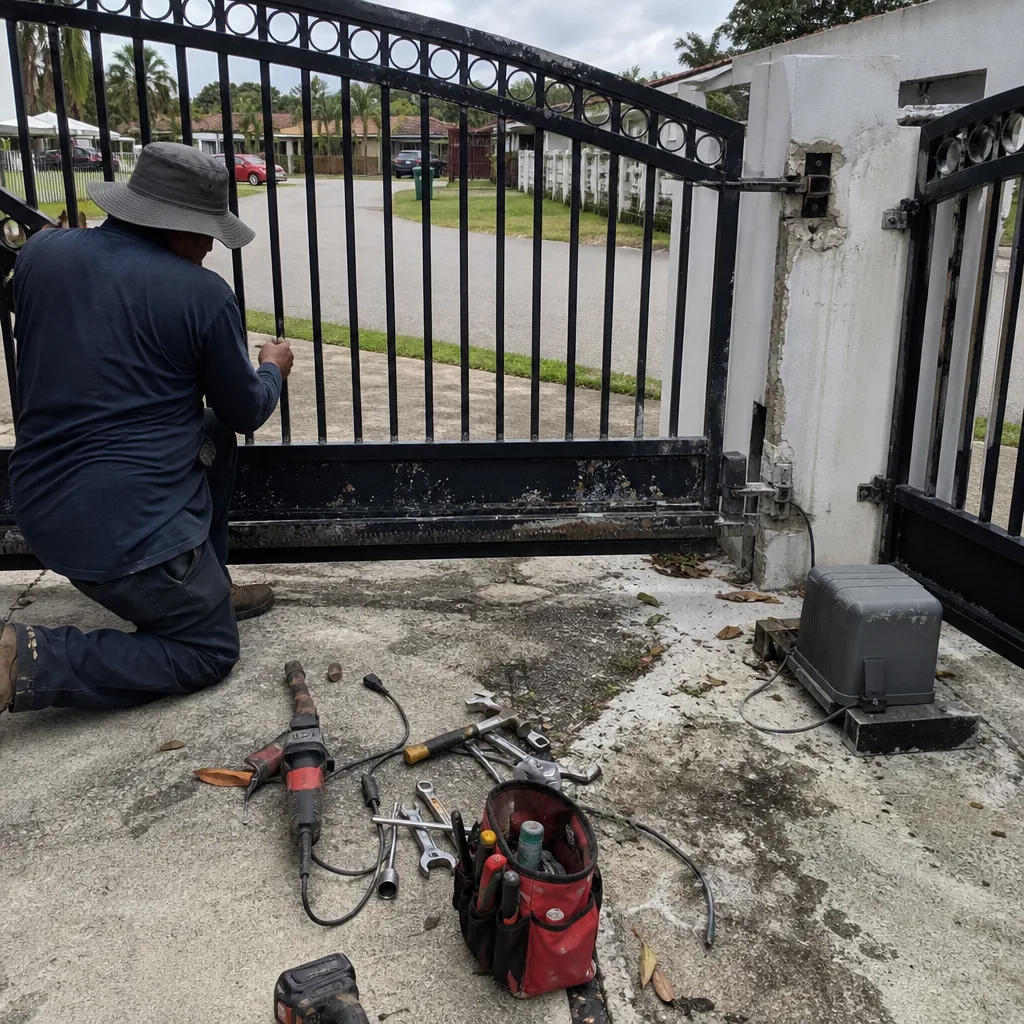 Before
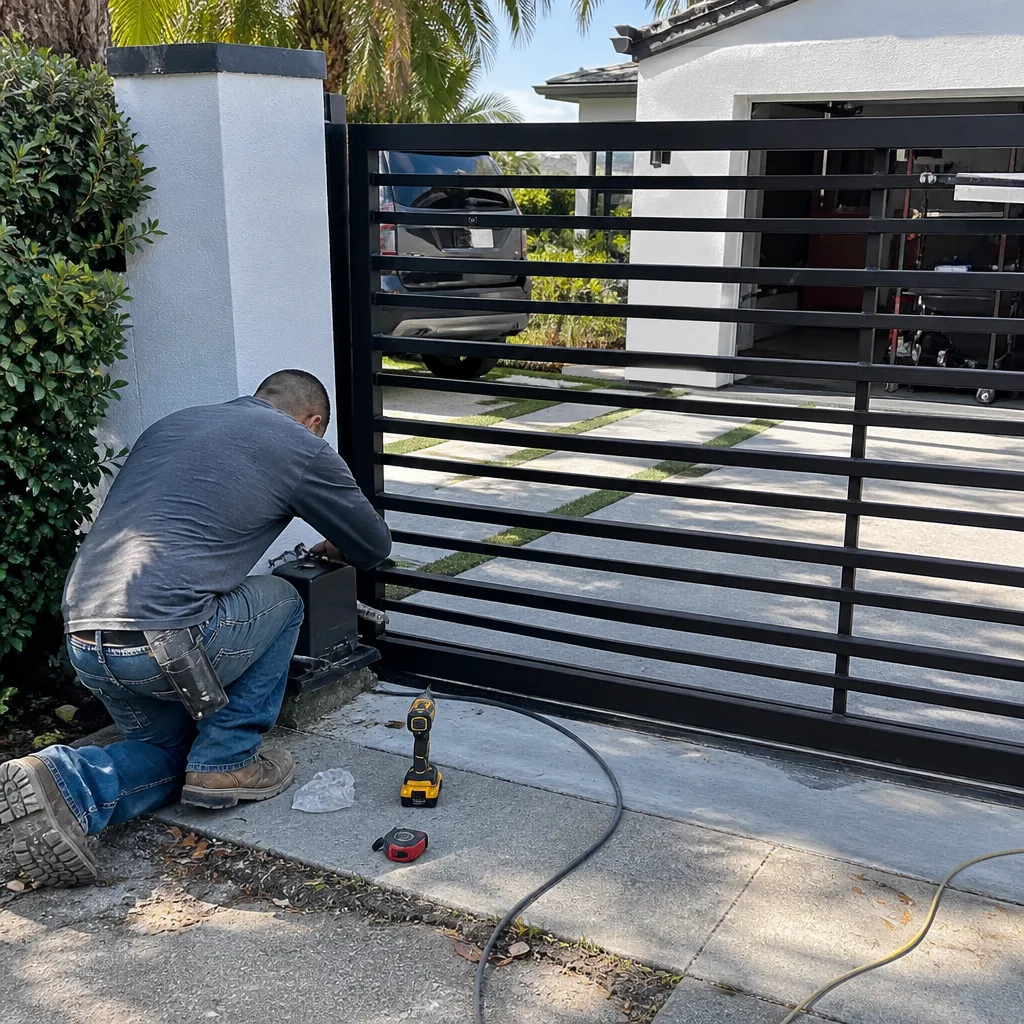 After
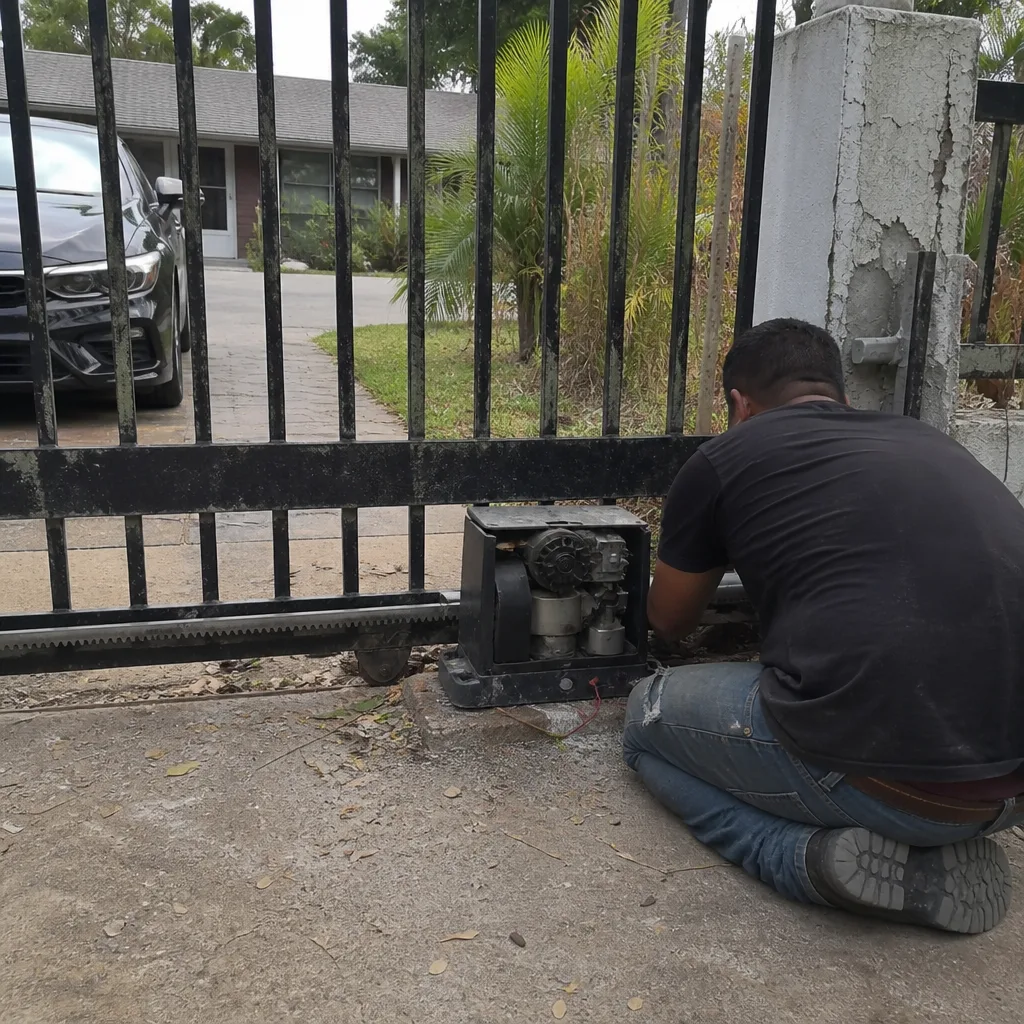 Before
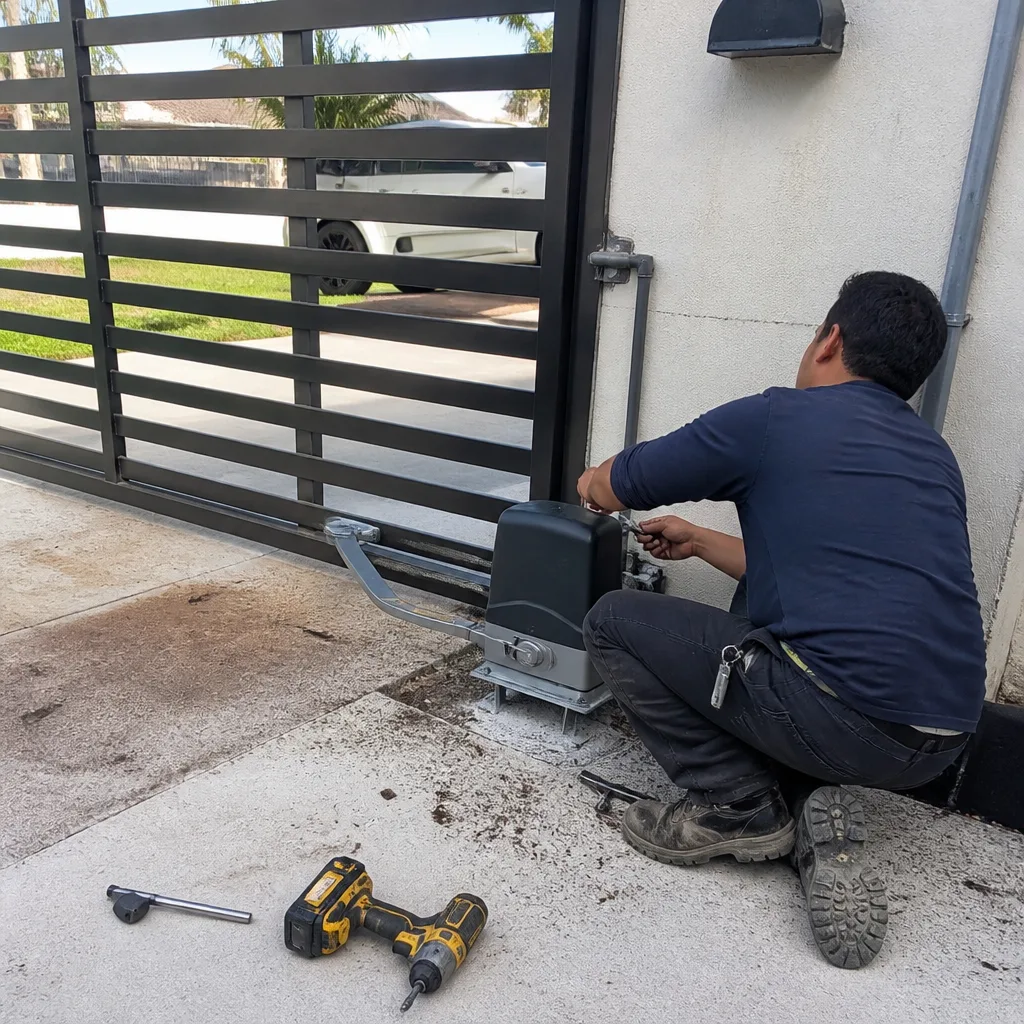 After
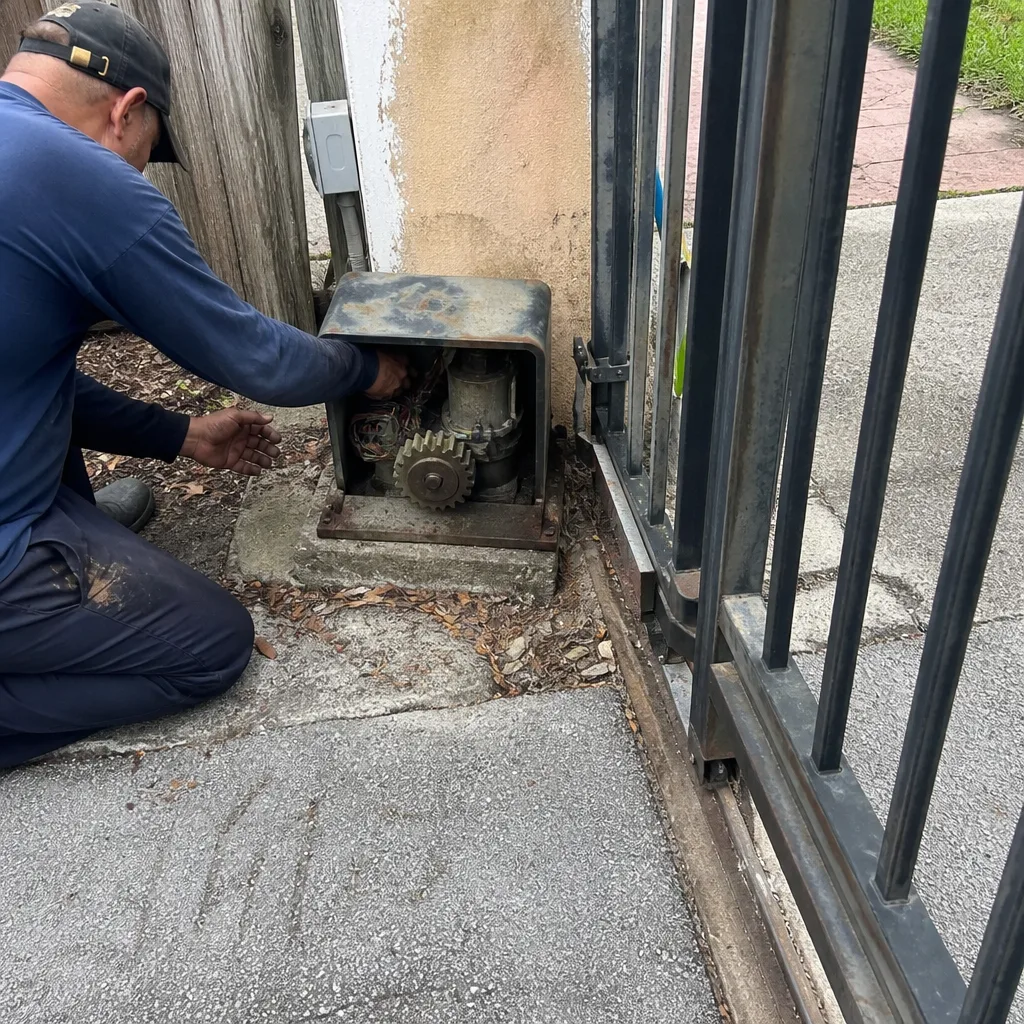 Before
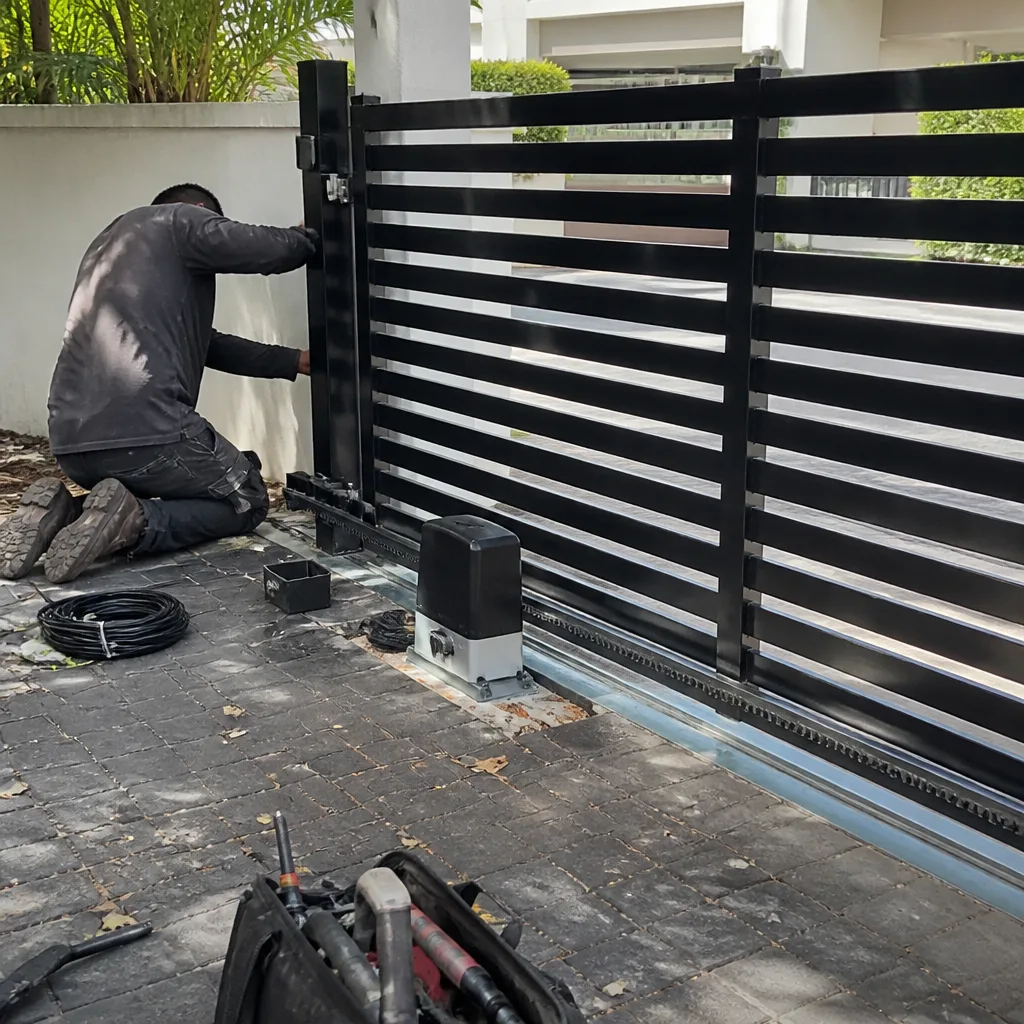 After